

Dental student · Scored well on the DAT and earned admission to dental school
Last updated: September 2026
Quick answer: Most students prepare for the DAT over about 2 to 3 months: finish biology, general and organic chemistry first, register with the ADA (the 2026 fee is $580), follow a structured study schedule, and take several timed full-length practice tests before test day (ADA 2026 Candidate Guide).
The Dental Admission Test (DAT) is a crucial requirement for admission into dental school. To secure a spot in a good dental school, achieving a high score on the DAT is essential. This article will provide a step-by-step guide on how to effectively prepare for the DAT.
Reviewer’s takeaway — Bryant C. (Dental student · Scored well on the DAT and earned admission to dental school)
Use one main resource to organize your preparation, and add other material only for a specific gap. Keep a sustainable daily workload and review mistakes regularly.
Requirements for Taking the DAT
- Completion of at least one year of college education, including courses in Biology, General Chemistry, and Organic Chemistry.
- Most candidates take the DAT after completing two or more years of college.
Application Process for the DAT
To take the DAT, you need to visit the American Dental Association website and submit an application. Upon submission, you will receive a unique identifier known as DENTPIN®. Moreover, there exists a mandatory examination fee of $580 (2026), which is non-refundable and non-transferable, that must be settled.
Once your application is processed, you will receive an eligibility letter from the ADA, allowing you to schedule your testing appointment. It is important to schedule your test within the 6-month testing window provided.
Choosing the Test Date
- Take the DAT well in advance before the dental school admission cycle, preferably at least a year before you plan to enroll.
- Typically, students opt to sit for the examination in the summer following their second year of study or at some point between their third and fourth years.
- Ensure you have completed the required subjects (Biology, General Chemistry, and Organic Chemistry) before taking the exam.
Costs Associated with the DAT
The DAT requires a non-refundable and non-transferable fee of $580 (2026), which includes administration costs, official score reporting to selected dental schools, an unofficial score report at the test centers, and score reporting to your pre-dental advisor. In cases of severe financial hardship, students may qualify for a partial fee waiver that covers 50% of the DAT fee.
Effective Study Methods for DAT
Subjects Covered in the DAT
- Exploration of the Natural Sciences: General Chemistry, Organic Chemistry, and Biology.
- Perceptual Ability: Two-dimensional and three-dimensional problem-solving.
- Reading Comprehension: Dental and basic sciences.
- Quantitative Reasoning: Numerical calculations, algebra, conversions, etc.
Best Study Practices for the DAT
- Take real-time simulated practice tests to familiarize yourself with the exam format and content.
- Consider enrolling in DAT prep courses that provide comprehensive study materials, practice tests, and content reviews.
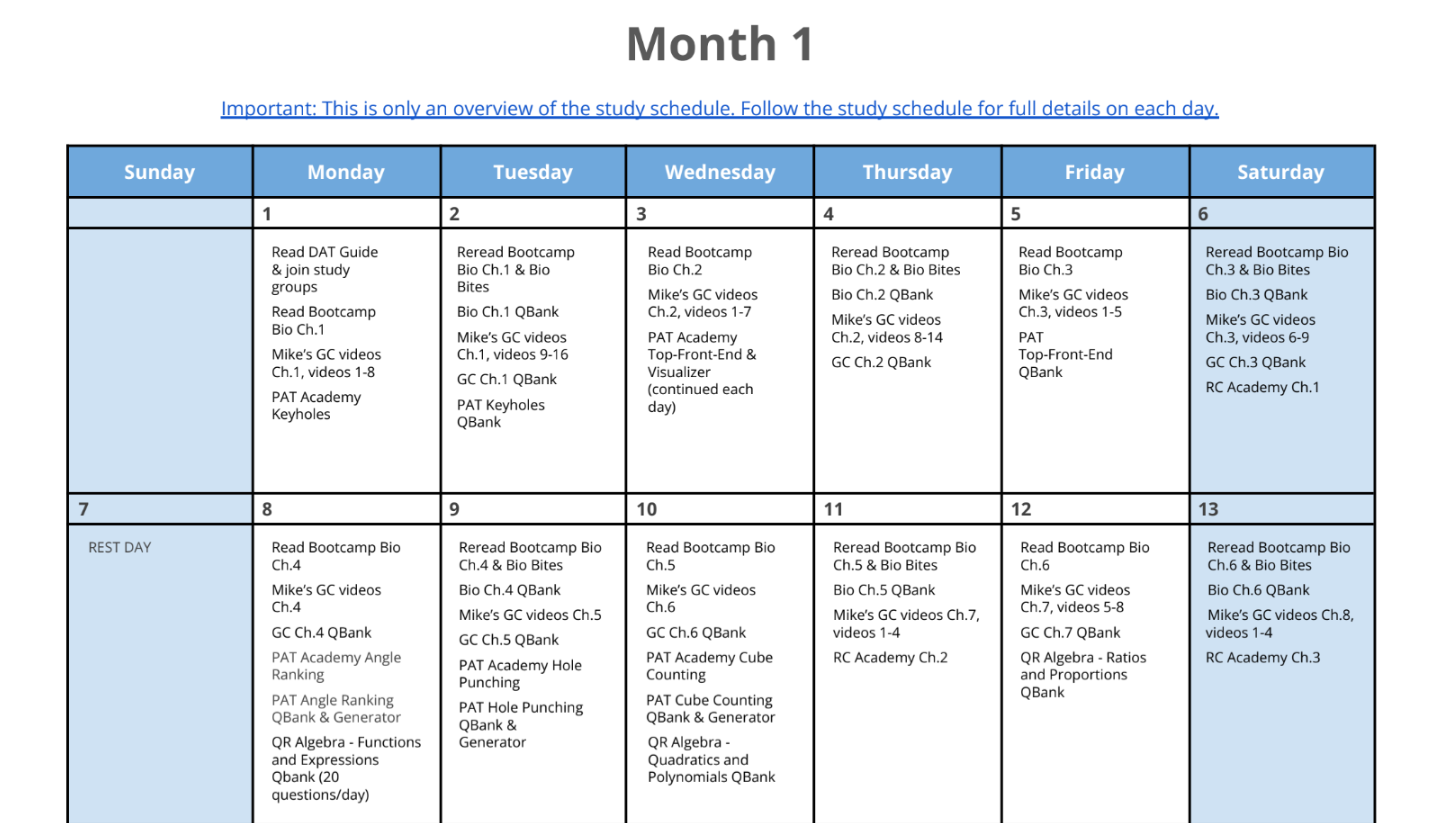
- Create a study plan with timelines to ensure efficient and effective studying.
- Dedicate around 3 hours a day, five days a week, for a duration of 3 months to adequately prepare for the DAT.
- You can check our top picks DAT Bootcamp and BoosterPrep .
Finding DAT Practice Tests
When preparing for the DAT, you have various options for practice tests. Paid DAT prep programs such as DAT Booster, DAT Bootcamp, or DAT Kaplan typically include a range of practice tests as part of their offerings.
These comprehensive programs provide access to multiple practice exams to help you assess your readiness for the actual test. Additionally, there are also free full-length practice tests available online.
Typically, these resources can be valuable in familiarizing yourself with the format and content of the DAT, allowing you to gauge your progress and identify areas for improvement.
What to Do on The Day Before the DAT Test?
- Review selected sections without causing test anxiety.
- Engage in enjoyable activities to relieve stress and anxiety.
- Eat a healthy balanced meal and ensure a good night’s rest.
- Prepare everything needed for the test day in advance.
Tips for Excellent DAT Preparation
- Start preparing around the end of your junior year in undergrad to have a fair chance at top dental schools.
- Seek a mentor’s guidance throughout the application process.
- Only take the DAT when you feel adequately prepared to avoid unnecessary expenses and disappointment.
- Submit your DAT application early, approximately 60-90 days before your intended test date.
- Taking the DAT during the summer after your sophomore year provides ample time for other application steps.

Effective Test-Taking Strategies for the DAT
Developing effective test-taking strategies is essential for success on the Dental Admission Test (DAT). Alongside comprehensive content review, mastering these strategies will help you approach the exam with confidence and maximize your chances of achieving a high score. Below are a few essential tactics to contemplate:
Understand the Exam Format
Familiarize yourself with the structure, sections, question types, and time limits of the DAT. This knowledge will enable you to plan your time effectively and avoid surprises on test day.
Time Management
Practice answering questions within the allocated time for each section during your study sessions. Develop a timing strategy that allows you to complete each section and review marked questions before time runs out.
Preview Questions
Before delving into passages or problems, quickly scan the questions. This will provide you with a roadmap of what to look for while reading or analyzing. It saves time and helps identify relevant information efficiently.
Utilize the Process of Elimination
When answering multiple-choice questions, rely on the process of elimination to remove obvious wrong answers. Even if you are doubtful, narrowing down your alternatives enhances your chances of getting the correct answer.
Manage Test Anxiety
Test anxiety can hinder performance. Practice relaxation techniques like deep breathing and positive visualization to manage anxiety on test day. Remind yourself of your preparation and capabilities to cultivate a confident mindset.
Make Educated Guesses
If uncertain about an answer, make an educated guess. Use contextual clues to eliminate unlikely choices. Remember, there are no penalties for incorrect answers, so it’s better to guess than leave a question unanswered.
Review and Proofread
Use any remaining time at the end of each section to review your answers. Check for errors or omissions, and ensure you understood the question correctly.
Simulate Test Conditions
Replicate test-like conditions during practice sessions. Use a timer, create a quiet environment, and eliminate distractions. Practicing under similar conditions enhances familiarity with the exam environment and improves concentration.
Learn from Practice Tests
Analyze your performance after completing practice tests. Identify strengths and weaknesses, focusing on improving weak areas through targeted content review and adjusting your study plan accordingly.
Maintain a Positive Mindset
A positive attitude and belief in your abilities make a significant difference. Trust your preparation and approach the exam with confidence. Remember, the DAT is just one aspect of your application, and a positive mindset enhances performance.
Test-Day Tips for the DAT
- Make sure you sleep well the night before the exam to be refreshed.
- Have a good breakfast to give your brain the energy it needs.
- Get to the test center ahead of time to reduce stress.
- Follow all the rules and instructions provided by the testing center staff.
- Stay calm and confident during the exam.
- Pace yourself and manage your time wisely.
- Answer all the questions, even if you’re unsure. There is no penalty for guessing.
- Review your answers if time permits.
- Stay concentrated and prevent yourself from getting sidetracked by other people taking the test.
Post-DAT
Upon completing the DAT, shift your focus to the subsequent steps in the dental school application process. Begin by preparing essential application materials, such as personal statements and letters of recommendation, highlighting your strengths and experiences. Ensure you submit your DAT scores to your desired dental schools.
Utilize the waiting period for interviews to conduct further research on dental schools. Stay actively engaged in extracurricular activities and community service to bolster your application. Maintain a positive and motivated mindset throughout the waiting period for admission decisions, knowing you have given your best effort and are closer to accomplishing your goal.
If you’re still early on the path, start with our guide on how to become a dentist.
Frequently Asked Questions
How many hours a day should I study for the DAT?
Many students study about 3 to 6 hours a day over 2 to 3 months. Consistency matters more than marathon days.
Do I need a DAT prep course?
Not necessarily, but most students use one, because courses bundle practice tests, question banks and PAT generators that are hard to replicate on your own.
How far in advance should I register for the DAT?
Register early. After you apply, you get a window to schedule your test, and popular dates and centers fill up.
Turning preparation into a routine
Choose a weekly workload that fits your commitments. Alternate learning with questions that test what you have covered, and revisit mistakes while they are still fresh. Adjust the plan when a topic needs more attention.
Conclusion
Remember, the key to success on the DAT is consistent and dedicated preparation. By following these steps and incorporating effective study practices, you can enhance your chances of achieving a high score and gaining admission to your desired dental school. Good luck with your DAT preparation!
When you’re ready to choose a course, our best DAT prep courses guide compares the leading options side by side.