
Medical student · Top-percentile MCAT scorer
Last updated: September 2026
Whose experience this is: this is a first-person account from Nathan M., who used Sketchy through his preclinical years and USMLE Step 1. Where the review says “I”, that is Nathan.
The short answer
Sketchy teaches through illustrated memory palaces — each fact is pinned to a place in a cartoon scene — and it is built for the subjects where rote recall is the bottleneck: microbiology, pharmacology and anatomy. It is strongest for medical students sitting USMLE Step 1, useful for MCAT students who are losing time on biology recall, and close to useless for CARS or anything reasoning-led. It is a memorisation tool, not an MCAT course.
Starting from MCAT to surviving medical school can be a daunting task, mainly due to the overwhelming amount of information that needs to be absorbed. Many students, including myself, struggle with memorizing complex subjects like anatomy, microbiology, and pharmacology.
However, the introduction of Sketchy into my study routine proved to be a game-changer. With the help of this invaluable resource, I not only managed to pass my microbiology and pharmacology blocks but also successfully completed Step 1 of my medical journey.
As I progress into my fourth year, I feel compelled to share my experiences and shed light on why Sketchy should be embraced by all medical students.
Note that Sketchy has separate modules for Medical, MCAT, Nursing/NCLEX NextGen, PA, Pharmacy and Nursing.
Who Can Benefit from Sketchy?
| If you are… | Does Sketchy help? | Why |
|---|---|---|
| A medical student sitting USMLE Step 1 | Yes — its core use | Micro and pharm are pure recall, which is exactly what memory palaces are for |
| An MCAT student losing marks on biology recall | Yes, as a supplement | Helps with the memorisation layer, but does nothing for passage reasoning |
| An undergraduate taking microbiology | Yes | Same subject matter, same recall problem |
| A nursing or pharmacy student | Yes | Drug names and side-effect profiles suit the format well |
| Someone whose weak section is CARS | No | CARS rewards reading practice, not memorisation |
Sketchy sells separate modules for Medical, MCAT, Nursing/NCLEX NextGen, PA and Pharmacy — make sure you buy the one matching your exam.
- Medical students from allopathic or osteopathic schools or preparing for USMLE: Regardless of the type of medical school you attend, Sketchy can be immensely beneficial.
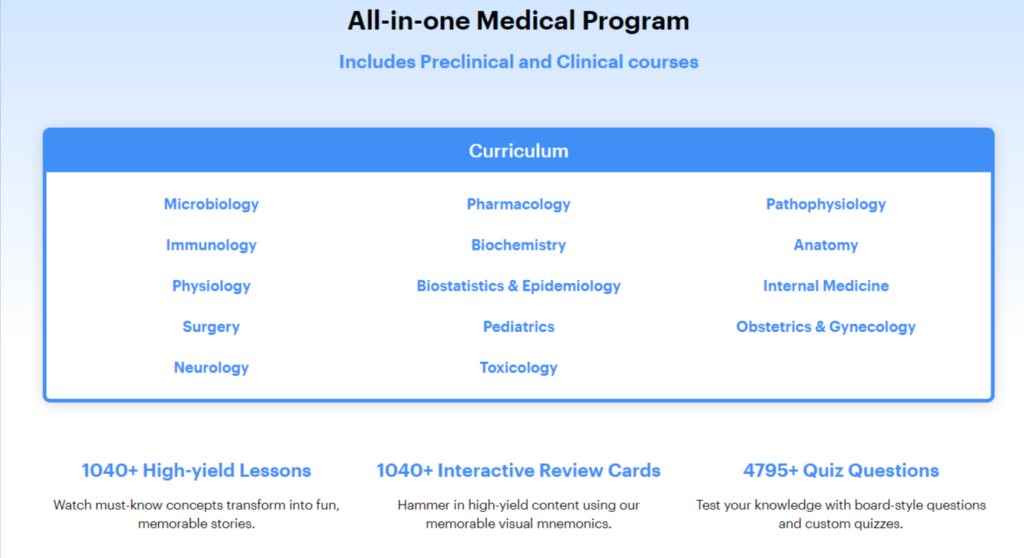
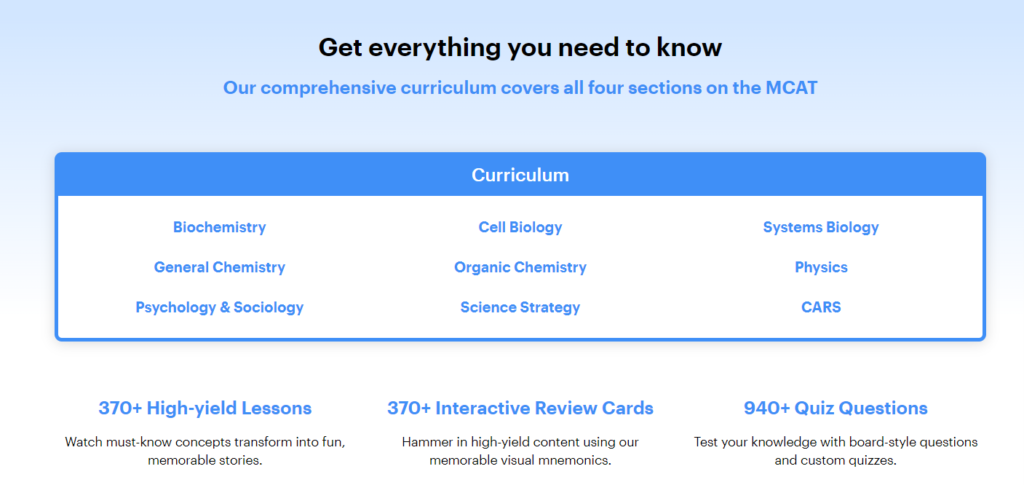
- Undergraduate students preparing for MCAT: Sketchy’s approach can also be valuable for those studying microbiology at the undergraduate level.
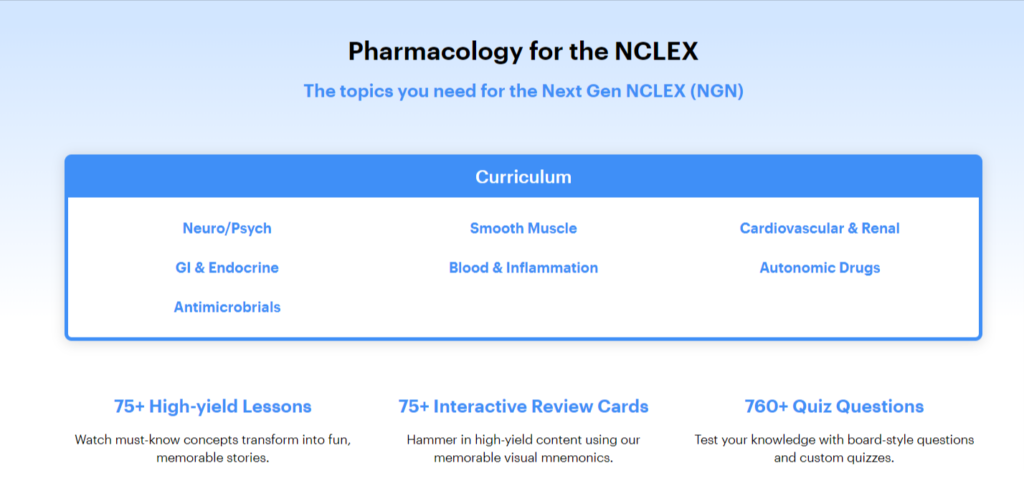
- Pharmacology for Nursing/Pharmacy students: Students in nursing or pharmacy programs may find the memory palaces created by Sketchy useful for memorizing drugs and their side effects.
Understanding Sketchy: An Overview
Sketchy is an animated video resource that aids students in memorizing complex material, particularly in the fields of microbiology and pharmacology. It employs a technique known as “memory palaces,” where students imagine a place or “palace” with various objects representing specific concepts.
It brings these memory palaces to life through animated drawings or “sketches.” This approach takes advantage of the concept that although recalling specific details may be challenging, we often have an easier time remembering the location of a place by relying on its surrounding environment. For instance, a memory palace may feature an imaginary mansion with a cluster of bananas, symbolizing potassium.
You can watch this video
In general, Sketchy offers both pre-clinical and clinical decks for medical students. “Sketchy Medical” covers all the necessary material for Step 1 and Step 2.
When Should I Incorporate Sketchy into My Studies?
I recommend that you incorporate Sketchy into your study routine early on, ideally during your initial year of medical school while undertaking pathology, microbiology, or pharmacology courses. Recently, Sketchy has unveiled a Step 2/Clinical series that can prove advantageous for students in the clinical years of medical school.
Accessing Sketchy: Where to Find It
Sketchy is readily available through its website, providing easy access to its comprehensive resources.
Reasons to Embrace Sketchy in Your Medical Journey
1. Effective Memorization Technique
Sketchy’s Memory Palace approach is highly effective. By associating concepts with vivid visuals, information becomes easier to retain.
2. Long-lasting Knowledge
The knowledge acquired through Sketchy extends beyond Step 1. You’ll find that the information sticks with you, enhancing your abilities even during clinical rotations. For example, I have impressed colleagues on rounds by recalling rare associations, such as the JC virus in renal transplant patients.
3. Enhanced Memorization
Sketchy makes the often tedious task of memorization more bearable and significantly easier. Personally, I credit Sketchy for helping me pass my microbiology and pharmacology blocks successfully.
4. Continued Utility
Although I regret not utilizing Sketchy for Step 2, I recently gained access to it and highly recommend it. If you struggle to remember certain diseases or concepts, Sketchy can aid in recalling challenging topics such as pericarditis and its etiologies and associations.
Utilizing Sketchy: Best Practices
How to get value out of it
Watch the sketch once without taking notes, then use the review cards to test recall rather than rewatching. Add the images to Anki so the spacing does the work for you, and use the workbook to draw the scene from memory — reproducing it is what makes it stick. Passive rewatching is the most common way people waste the subscription.
1. Review Cards
Each Sketchy video includes a “review card” at the bottom, featuring a sketch of the entire video with labels explaining the meaning of each symbol. These review cards provide an excellent opportunity to consolidate and review the material covered.
2. Purchase Workbook
I strongly advise obtaining a printout of all the Sketches, allowing you to take notes and serve as a helpful review before exams. Having a tangible copy of the Sketches can be beneficial for comprehensive studying.
3. Anki
To reinforce your learning, consider using the Anking Step decks alongside Sketchy.
What’s the Latest with Sketchy?
Sketchy now offers a combined subscription plan for Step 1 and Step 2 materials. Take advantage of their Black Friday offer, providing a 20% discount on all subscription plans. I highly recommend securing your subscription before the offer ends.
Studying anatomy too? See our Anatomy Bootcamp discount code page.
Deciding whether Sketchy helps you
Try a sample lesson on a topic you already know, then one you find difficult. Check whether you can recall and apply the information afterward. Choose the format because it helps you learn, not simply because it feels easier to watch than a textbook is to read.
Conclusion
As a medical student, the challenges of memorizing extensive material can be daunting. However, Sketchy’s innovative approach with memory palaces and animated sketches has proven to be a game-changer.
By using Sketchy, you can improve your ability to retain information, even beyond Step 1. Don’t miss the opportunity to optimize your studying and enhance your medical knowledge with Sketchy’s comprehensive resources.
Frequently asked questions
Is Sketchy worth it for the MCAT?
As a supplement, yes — for the biology and biochemistry facts you simply have to recall. It does nothing for CARS or for passage reasoning, so it cannot replace an MCAT course.
Which Sketchy module should I buy?
Sketchy sells separate modules for Medical, MCAT, Nursing/NCLEX NextGen, PA and Pharmacy. Buy the one matching your exam — the Medical module is built around USMLE content, not the MCAT.
How should I actually use Sketchy?
Watch each sketch once without notes, test recall with the review cards rather than rewatching, add the images to Anki so spacing does the work, and redraw the scene from memory. Passive rewatching is how people waste the subscription.
Does Sketchy help with anatomy and pharmacology?
That is its core strength. Memory palaces suit subjects where the bottleneck is volume of recall — microbiology, pharmacology and anatomy — more than anything reasoning-led.